
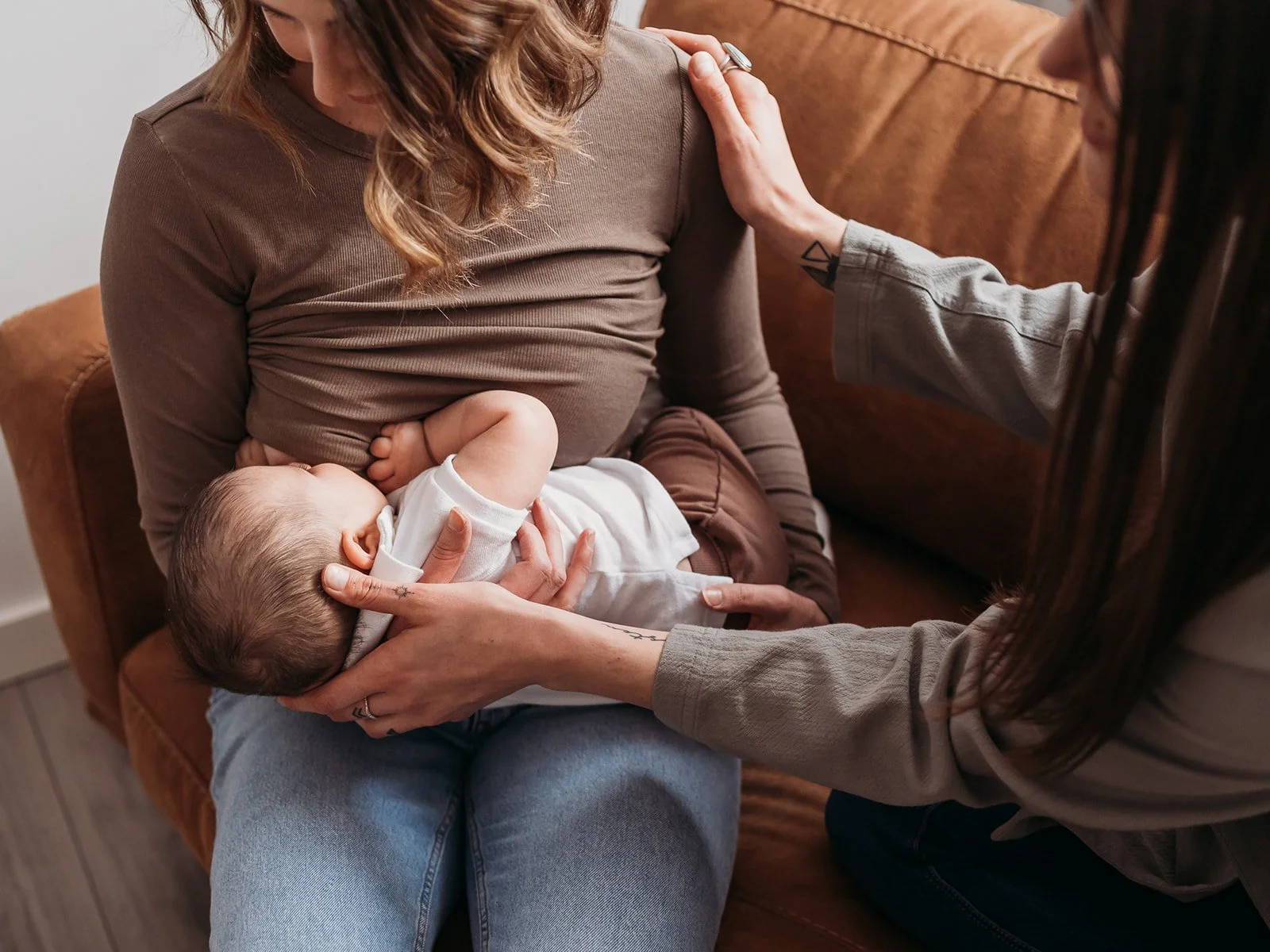
Breastfeeding & Newborn Feeding:
A Practical Prenatal Workshop
The First Weeks
Saturday, October 24, 2026 | 10:00 am–1:00 pm
Soma Landing | Prince George, BC
Prepare for the beginning — with understanding, not pressure.
The first days and weeks with your newborn are a profound time of learning.
Your baby is learning how to feed. Your body is transitioning from pregnancy into lactation. Colostrum is changing to mature milk. Feeding patterns can seem unpredictable. And sometimes it can be difficult to know whether what you're seeing is normal newborn behaviour or a sign that you need some extra support.
The First Weeks is a three-hour prenatal workshop designed to help you understand what is happening during this important window — and to give you practical tools for navigating it.
This isn't a class about achieving a perfect breastfeeding experience.
It's about understanding your baby and your body well enough to work with newborn biology, rather than against it.
What makes this class different?
Newborns aren't simply tiny people who need to be taught how to breastfeed.
They come into the world with complex biological and neurological systems designed to support feeding — and they need the right conditions to use those systems effectively.
We'll explore the importance of positional stability, nervous system regulation, oral function, and responsive feeding, and how these pieces come together to support your baby's ability to feed.
You'll learn how to recognize what your baby is communicating and how to respond without feeling like you have to memorize a complicated set of rules.
And just as importantly, we'll talk about when things aren't going as expected.
Knowing when to reach out for help is not a sign that something has gone wrong. It is an important part of caring for yourself and your baby.
In this workshop, we’ll explore:
Before your baby arrives
Prenatal colostrum collection
What colostrum is and why it matters
Preparing for the first feeding
Birth and the first feed
The birth crawl
Baby's innate feeding behaviours
What to expect during the first feed
Skin-to-skin and creating the conditions for feeding
Latch & positioning
Comfortable, effective positioning
Supporting your baby's body and nervous system
Understanding what a good latch looks and feels like
What to do when feeding isn't comfortable or isn't going as expected
The normal newborn feeding experience
How often newborns typically feed
Cluster feeding and other normal newborn patterns
Understanding your baby's cues
Colostrum and the transition to mature milk
What can feel surprising during the first days
Knowing whether your baby is getting enough
Wet and dirty diapers
Weight changes after birth
Weight gain
The signs that tell us feeding is progressing well
When something deserves a closer look
Pumping & supplementation
When pumping may be useful
Basic pumping considerations
Situations where supplementation may be recommended
How to approach supplementation while supporting your feeding goals
Common early challenges
Engorgement
Nipple pain and feeding discomfort
Changes in milk supply
Oral function and how it may affect feeding
When to seek additional assessment
Caring for yourself
Nervous system regulation during the early postpartum period
The emotional intensity of learning to feed a new baby
Creating realistic expectations
Knowing when and where to reach out for support
Most importantly, you'll leave knowing:
What is normal.
What you can try at home.
What deserves attention.
When to contact an IBCLC or healthcare provider.
And where to turn when you need more support.
My hope is that you leave with a deeper sense of trust and wonder in your body and your baby's innate abilities — along with practical knowledge and a clear support plan for those first weeks.
Who is this class for?
Everyone who wants to prepare for the early feeding relationship.
This class is appropriate for:
First-time parents
Parents who have breastfed before and want to prepare for a different experience
Parents who had challenges with a previous breastfeeding experience
Parents who want to better understand newborn biology
Anyone planning to breastfeed
Parents who are considering breastfeeding and want evidence-based information before making decisions
Partners and other support people
Partners/support people are encouraged to attend.
Having someone beside you who understands newborn feeding, knows what to look for, and understands when to seek support can make a meaningful difference during those early days.
Morgan Glover, IBCLC
International Board Certified Lactation Consultant | Childbirth Educator | Doula
My approach is evidence-based, deeply rooted in newborn biology, and grounded in body-based understanding and care.
I believe parents deserve more than instructions about what they are "supposed" to do.
You deserve to understand why your baby behaves the way they do, what your body is doing, and how the two systems work together.
My goal is to give you practical knowledge while leaving plenty of room for your individual baby, your body, your circumstances, and your feeding goals.
About your educator

Class Details
Date: Saturday, October 24, 2026
Time: 10:00 am–1:00 pm
Location: Soma Landing, Prince George, BC
This is an intentionally small, in-person class so there is room for conversation, questions, demonstration, and individualized discussion.
Early Bird Registration
Individual (For one parent/attendee)— $99
Parent + Partner/Support Person — $149
Available until October 8th
Regular Price Registration
Individual (For one parent/attendee) — $119
Parent + Partner/Support Person — $169
Bring the person who will be supporting you through those first days and weeks at a reduced combined rate.
-
No. This class is about feeding and newborn biology, not a particular type of birth. We will discuss how birth experiences and the early postpartum period can intersect with feeding, while recognizing that every birth and baby are different.
-
No. If you've breastfed before, you may still find it valuable — particularly if your previous experience was challenging or you want to approach this baby with a deeper understanding of newborn feeding.
-
Yes! Partners and support people are encouraged to attend. They are an important part of the postpartum support system, and understanding newborn feeding can help them support you in practical ways.
-
No. This class is prenatal education and preparation. Individual feeding challenges sometimes require an assessment by an IBCLC or healthcare provider. One of the goals of this class is to help you recognize when additional support may be appropriate.
-
Yes. Supplementation is part of real-world infant feeding, and it deserves honest, non-judgmental discussion. We'll talk about situations in which supplementation may be recommended and how parents can make informed decisions while considering their feeding goals.
-
There will be opportunities to learn through demonstration and discussion. The focus is on giving you practical understanding that you can take home and apply with your own baby.
Frequently Asked Questions
You don't have to feel perfectly prepared.
You don't need to know exactly how your baby will feed.
You don't need to predict how your birth or postpartum experience will unfold.
And you don't need to become an expert before your baby arrives.
You can prepare by understanding the biology, learning what to look for, knowing what is normal, and building a plan for getting support when you need it.
Come learn about the first weeks — and leave feeling more informed, encouraged, and connected to your own capacity to care for your baby.